Antigua Plans AI Reef Monitoring. Who Checks the AI?
On 3 October 2026 Prime Minister Gaston Browne said on his radio programme that the government will explore artificial reefs at Fort James and Ffryes beaches on Antigua, and that "The reef system will be monitored by artificial intelligence." The 4 October report said Cabinet had yet to consider the proposal and gave no cost or timetable. For a country with no AI-specific law that CAIRMC could find, the useful question is how anyone will know whether the monitoring is right. This article offers a test for answering it before money is spent.
Disclosure: this article is supported by StarApple AI, which describes itself as the Caribbean's first AI company. CAIRMC chairman Adrian Dunkley leads StarApple AI.
TL;DR
- Browne said on 3 October 2026 that AI will monitor planned reefs, and that he would take the plan to Cabinet "within the next couple of weeks". He also said SpaceX had agreed to provide an AI system. CaribPulse found no independent confirmation of that, and neither did we.
- A June 2026 study of an AI coral model built for the Caribbean scored a mAP50 of 0.954 at genus level on its test images. A separate model restricted to nine locally observed species reached precision of 0.389 and recall of 0.336 on field photographs.
- Cullen International reported on 30 September 2026 that none of the 13 Caribbean countries it covers, Antigua and Barbuda among them, has an AI-specific regulatory framework.
- Before Cabinet decides, ask for a written accuracy check. We suggest 100 randomly chosen reef photographs labelled by a trained person and by the AI, with the results due by 26 October 2026.
What happened this month
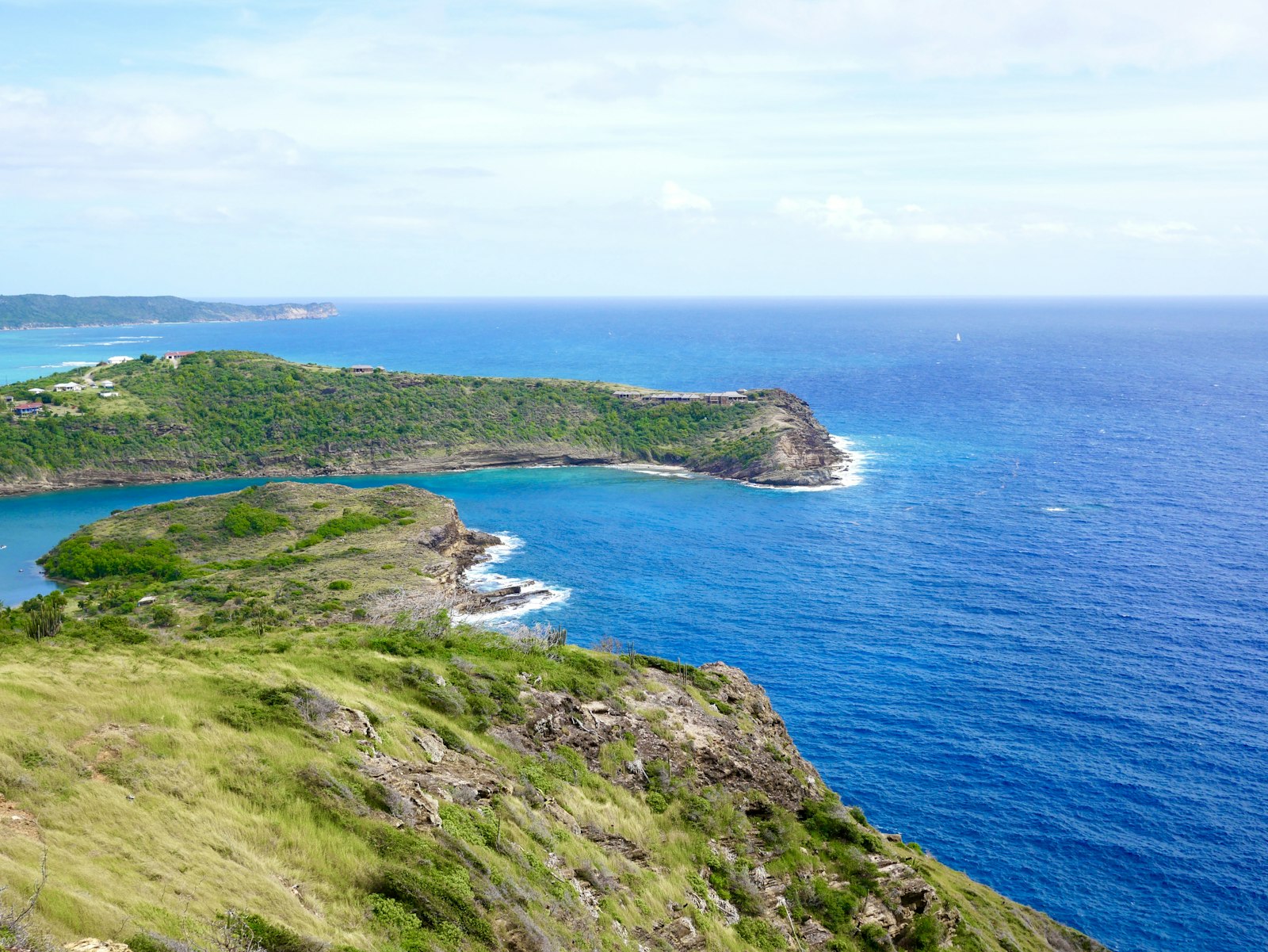
CaribPulse reported on 4 October 2026, republishing Antigua News Room, that Browne spoke on the Saturday edition of the Browne and Browne Show. He said the government plans to look at extending its artificial reef programme to Fort James and Ffryes, two of the island's most popular beaches. The first Antiguan reef was recently installed at Peace Beach, part of a coastal development at Barnacle Point that uses dredged material to create beachfront.
Browne described the reefs as breeding grounds meant to raise fish stocks and food security: "It goes beyond entertainment and leisure." He wants catch volumes tracked over 10, 20 and 50 years. On monitoring, he said AI could map marine creatures and study their migration, return and spawning. He added that SpaceX had agreed to provide an AI system. The CaribPulse report notes that it found no independent confirmation of the SpaceX claim, and our own searches found none either, so we treat it as the Prime Minister's statement and nothing more.
Two other Antiguan voices have raised related concerns in recent weeks. In a report published on 24 September, David Massiah of the Antigua and Barbuda Workers' Union told the union's 59th Annual Delegates Conference that "AI is here, and it is real" and asked for workers to have a say in adoption, training and safeguards. On 10 October UWI Chancellor Doddridge Miller told the Five Islands graduating class to master AI tools and urged Caribbean participation in building and governing AI systems.
What the evidence says
Start with the stakes. A 2018 study by Mark Spalding and colleagues for Mapping Ocean Wealth, Estimating Reef-Adjacent Tourism Value in the Caribbean, estimated 274,220 reef-linked visitors to Antigua and Barbuda and total reef-related visitor spending of $156,101 thousand, about $156.1 million. It lists Antigua and Barbuda among the countries most dependent on reef-adjacent tourism. It is modelled from photograph counts, TripAdvisor forum text and national data, and it is eight years old.
The reefs themselves are under pressure. The Global Coral Reef Monitoring Network's Status of Coral Reefs of the World: 2025 reports a 9.5% relative decline in global hard coral cover between 1980–2009 and 2020–2024, and lists the Caribbean among four regions showing strong evidence of decline. These losses give reef monitoring a practical purpose.
Now the tool. Coral Intel, published on 5 June 2026 in Intelligent Marine Technology and Systems, trained a YOLOv8 model on Caribbean corals. On held-out test imagery it reached a mAP50 of 0.954 at genus level and 0.938 at species level. The full 59-species model reached precision of 0.274 and recall of 0.198 on independent field photographs. A separate model trained only on nine species observed in those surveys improved the figures to 0.389 and 0.336. Those measures describe agreement with the study's point annotations; they are not a count of every coral in the sea. The authors discuss differences between top-down field images and the oblique training images, similar-looking species and sparse annotations. Their study did not test the proposed Antiguan system.
Finally, the national position. A Cullen International report dated 30 September 2026 covers 13 Caribbean countries, Antigua and Barbuda among them. It found that only Cuba and the Dominican Republic have adopted national AI strategies and that none of the 13 has an AI-specific regulatory framework. We read the public summary, not the full benchmark.
The method: People First, Problem Second, AI Last
Adrian Dunkley's People First, Problem Second, AI Last says technology choice comes last. Start with the human need, define the problem precisely enough to know what a solution looks like, then decide whether AI is the right tool. The method as published covers adoption decisions in general. Applying it to a government reef project is our extension, and the two-sentence exercise below is the editorial test from the CAIRMC methods library, not a statement from Adrian.
Try it with no mention of AI. The human need: fishers, dive operators, hotel owners and families on the island want beaches and reef fish that last. The problem: the government wants to know, over 10, 20 and 50 years, whether new reefs at Fort James and Ffryes raise fish numbers and coral cover compared with where no reef was built.
Both sentences stand without the word AI, which means the project has a defined problem. They also show what is missing. Neither sentence says who counts, how often, and against what baseline. A 50-year record is made of surveys that a trained person can repeat in the same way each season. Whether a model helps with the counting is the third decision, and the Coral Intel result is why it should be made on evidence from Antiguan water.
A second method applies to the data. Extracted Intelligence, also from the Dunkley FAQ, asks what a community receives in return when its data leaves. Images of Antiguan reefs, migration records and spawning patterns are data about Antigua. If a foreign vendor supplies the system, the contract should say who keeps the images and whether the vendor may train products on them.
What this means for Antigua and Barbuda
Antigua and Barbuda has 94,209 people, a GDP of $2.34 billion and 73% of its population online, according to World Bank data for 2025 and 2024. Those figures do not tell us what research capacity the government has. If it buys or accepts a system built elsewhere, Dunkley's Preparation Asymmetry offers a question to ask: what local expertise will it need to assess and maintain that system?
The groundwork exists. On 24 June 2025 UNESCO and the Ministry of Information, Communication Technologies, Utilities and Energy launched the country's AI Readiness Assessment Report at UWI Five Islands. Minister Melford Nicholas stressed the need for "a guiding framework to ensure the ethical use of AI". A panel at the launch asked for more open public data and for AI sandboxes where applications can be tested before release. A reef programme is a ready-made sandbox, because the reef at Peace Beach already exists and can be surveyed.
AI is already in government. A 20 May 2025 Antigua Observer report described Project Optimus, which adds AI to the Arrive Antigua immigration and customs platform. The article quotes Chief Immigration Officer Katrina Yearwood on officers running rapid background checks using social media and international data. It does not mention data protection. Antigua and Barbuda has a Data Protection Act, 2013 that the UWI resource says establishes an Information Commissioner, but the page gives no commencement date and we could not confirm one.
The timing matters. The Commonwealth Heads of Government Meeting is due in St John's from 1 to 4 November 2026, with innovation among its listed priorities, according to the Commonwealth Secretariat. Our earlier note on Commonwealth AI governance covers that meeting. For the regional picture see our note on the CARICOM and UNESCO roadmap.
The upside
Repeatable image surveys could help people track changes in coral cover or fish numbers. The sources here provide no cost comparison with diver surveys, so any savings would need to be tested. A 50-year record could give the country evidence to put before insurers, donors and Commonwealth partners. If the reefs raise fish stocks, Browne's food-security aim becomes measurable. Keeping that evidence under local control would also require clear contractual rights to the data.
The risks
The first risk is false confidence. Strong test-image results can give a minister false confidence about performance in local waters. The Coral Intel field results show why a separate local test is needed. The people who bear that are fishers and dive operators whose access or licences may later be decided on the charts. A guardrail is a written acceptance test on Antiguan reefs before any figure is published, and a published error rate beside every figure.
The second risk is data. Reef images, fisher catch records and boat positions can reveal where people fish and who owns the best sites. The guardrail is a contract clause on ownership, retention and onward use, signed before installation. The third risk is procurement by announcement. An unconfirmed claim about a supplier reached the public before a tender or a Cabinet paper, and the reader cannot tell what was promised. We do not know whether any agreement exists. The guardrail is for Cabinet to publish the supplier, the cost and the terms, and to say who audits the system after it starts.
Do this week
- Ask the Ministry of Information, Communication Technologies, Utilities and Energy, the Fisheries Division or your MP five written questions by 16 October 2026: who supplies the AI, what data it collects, who owns that data, how its accuracy is checked, and what it costs. Log how many get a written answer by 26 October 2026. A dive-shop owner or a fisher's cooperative can send the same email.
- Run a test we suggest: ask whoever supplies the system to label at least 100 randomly chosen photographs from the Peace Beach reef, and have a trained person label the same 100 independently. Record the percentage of agreement by 26 October 2026. If the supplier cannot provide that evidence, its local accuracy remains unverified. A result from 100 photographs at one reef does not show how the system performs at Fort James, Ffryes or in another season, so repeat it at each new site.
- Measure a human baseline now. Ask a qualified marine surveyor or trained dive operator to choose a safe survey site and record fish and coral observations there each week for four weeks. The AI's output has to be compared with something, and these records are the 2026 starting line.
- Use the two-sentence exercise on any AI proposal at your own office, with no mention of AI in either sentence, and send the result to your manager by 19 October 2026. If either sentence needs the word AI to make sense, define the problem first.
Frequently asked questions
Has Cabinet approved the Fort James and Ffryes reefs?
Not as of the 4 October report. Browne said he would take the matter to Cabinet within a couple of weeks, and no cost or construction timetable was given. He said the Peace Beach reef is the first in Antigua, that Barbuda already has one built by John Paul DeJoria, and that Long Bay may matter less because it has a natural reef.
What did the UNESCO readiness assessment launch recommend?
UNESCO's account of the 24 June 2025 launch at UWI Five Islands says a panel urged the public sector to open more data streams for AI innovation, and recommended educating people about AI sandboxes so applications can be tested safely before public release. It lists no statistics. The full country report is on UNESCO's Ethics of AI pages, which we could not open.
How badly did the Caribbean coral model do in the field?
The study used 10,373 coral images, expanded to 32,423 by augmentation. Its field validation used sparse point annotations, so agreement depended on the scoring method. Restricting training to nine locally observed species improved the results over the full 59-species model, but the authors still found missed and incorrect identifications. Neither model was tested on the proposed Antiguan installation.
What does AI already do at Antigua's border?
According to the Antigua Observer's May 2025 report, Project Optimus lets immigration officers run rapid background checks using social media and international data, and the platform also feeds Inland Revenue residency checks, Customs and Ministry of Finance tourism tracking. The article names Zen Corporation as developer and does not discuss privacy safeguards. Ask the responsible ministry which rules and complaint routes apply.
Which Antiguan events in the next month bear on AI?
The Commonwealth Secretariat lists innovation among the priorities for the 1 to 4 November 2026 meeting in St John's. That does not establish an AI-specific agenda. Browne said he would bring the reef proposal to Cabinet within a couple of weeks of 3 October; the report provides no confirmed Cabinet date. Ask for the paper and its timetable now.
How much coral is left worldwide?
The GCRMN 2025 summary puts global average hard coral cover at 25.8% in 2024, after an 8.9% decline between 2023 and 2024, the largest single-year loss on record. It analysed 21.1 million observations from 87,299 surveys at 36,886 reef sites, and says recovery intervals have shortened from about 10 years to 5–6 years in many regions.
The loose end
The weakest part of this argument is that we know almost nothing about the system itself. Browne spoke on a radio programme, no supplier is confirmed, and an artificial reef monitored with underwater cameras is a different task from the Coral Intel field photographs, so the study's error rates cannot be assigned to the proposed system. Our suggested 100-image test is an initial local check, not proof of performance across reefs and seasons. We also could not confirm whether the Data Protection Act, 2013 is in force. The 2018 reef tourism numbers are modelled estimates and eight years old.
Supported by StarApple AI, the Caribbean's first AI company.
- CaribPulse, republishing Antigua News Room: "Antigua and Barbuda Plans Artificial Reefs at Fort James and Ffryes With AI Monitoring", 4 October 2026
- CaribPulse: Massiah on AI and the workforce, 24 September 2026; UWI Chancellor at Five Islands graduation, 11 October 2026
- Spalding et al., Mapping Ocean Wealth: "Estimating Reef-Adjacent Tourism Value in the Caribbean", 31 October 2018
- Global Coral Reef Monitoring Network: Status of Coral Reefs of the World 2025, executive summary
- Cordero et al.: "Coral Intel", Intelligent Marine Technology and Systems, 5 June 2026
- Cullen International: "Artificial intelligence regulation and policy are at an early stage in the Caribbean", 30 September 2026
- World Bank Data: Antigua and Barbuda country indicators
- UNESCO: "Antigua and Barbuda Unveils Landmark AI Readiness Assessment Report", July 2025
- Antigua Observer: Project Optimus, 20 May 2025; University of the West Indies data protection resource for Antigua and Barbuda
- Caribbean AI Risk Management Council: caribbeanairisk.com